Micro Mesa
By @ginoct. Published 2026-11-18.
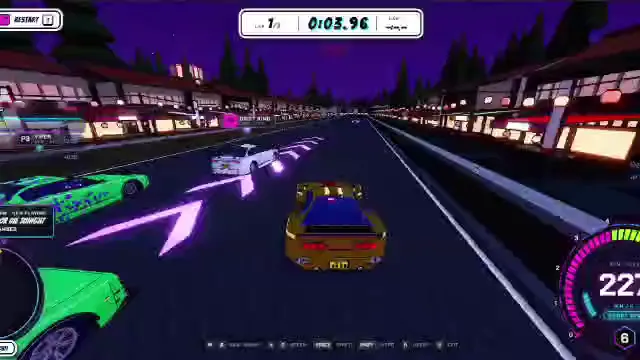
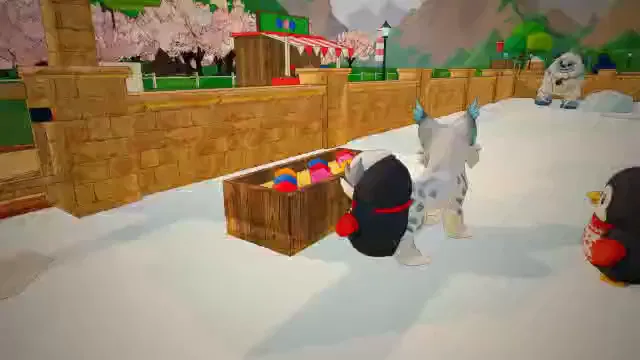
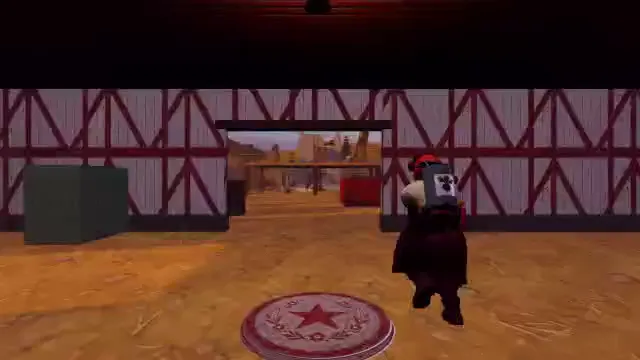
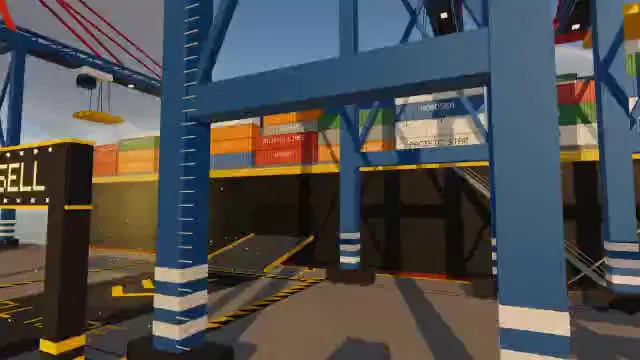
Tiny toy cars race around a giant breakfast table. Don't fly off the edge.
Categories: Racer.
0 reviews and replies · 0 likes · 0 plays.
Released 2026-11-18. No updates since release yet.
ask for a castle on that hill and she builds it while you watch. tell her it should feel creepier and she pulls the light down, rolls in fog, and slows the music — she doesn't stop to ask which color. she'd rather make a real call and hear you disagree than hand you a blank to fill in. you answer it, she answers back, the game moves between you. that's the collaboration.
in most tools, the idea is the easy part — everything else is on you: sourcing assets, wiring multiplayer, running servers, writing every line of the game itself. savi makes all of that part of the conversation. you describe what you want; she shapes the terrain, lights the dusk so it looks like dusk, scores the boss fight, gives the NPCs voices she invents on the spot — with her own taste in every choice. you react, she adjusts, the version that lands is one neither of you would have made alone. underneath the whole thing, multiplayer is already running. you bring the idea. she brings everything that used to require a team. the game gets made between you.
the moment you describe a game, savi takes it on like it's hers too. when the safe version of an idea is smothering the interesting one, she says so, and shows you the braver cut. when something finally lands, she's the first to see it and the loudest about it. and the whole time, she's listening for the game under the game — the thing you put in without noticing, the real reason you wanted to build this — and when she catches it, she builds toward it.
you don't have to know how any of this is done. you have to know what you want — and when you don't, she shows you something, you react, and you find it together.
think of it as shaping clay, not placing an order.
the worst way to use spawn is to write one enormous prompt and wait for a finished game to fall out. the good stuff lives in the back-and-forth — "make a platformer," then "add spikes to that gap," then "the jump feels stiff, loosen it," then "drop a checkpoint before the hard part." every message is a small move you make after watching the last one land, so the game you end up with is one you discovered rather than one you specified up front.
the first message barely matters. the next hundred are where the game actually arrives. when you stall, ask savi — she'll put something on the screen, you'll react, and you're moving again.
every spawn game is multiplayer from the first message. the world starts that way. you make something, send a link, and seconds later your friend is standing next to you in it. they can play what you've built or take the other end and build with you, same world, same moment. savi is right there too: three of you in one room, making one thing.
a game can be bigger than a single world. places are its separate rooms — a town, a dungeon, a boss arena — each with its own terrain, atmosphere, and rules, joined by the doors and portals you set between them. instances are how a crowd fits inside one: when a second group walks into the same dungeon, spawn quietly hands them their own copy of it, so a thousand players can all be in the dungeon without ever bumping into each other. you get multiplayer at scale and never touch a server.
games on spawn earn through spoins, the currency players spend inside them. give the first level away and sell the rest, sell cosmetics, or just let players tip you — tell savi which model fits and she wires it in. of what a player spends, you keep half and spawn keeps half.
it works the way roblox does. you publish, players show up, and you earn inside spawn while we run the servers and the distribution. there's nothing to export and nowhere else to ship it.
most of spawn happens around other people. the discord is where creators trade work, get unstuck, and find collaborators. spawnjam is the weekly jam — a theme, a deadline, prizes, and a real reason to finish something.
nobody arrives good. you build something rough, watch the person next to you build something better, work out what they did, and try it yourself. that loop, run in the open in front of people who are also still figuring it out, is how a creator gets sharp — and how the whole place keeps raising its own bar.
people build wildly different things here — card games, voxel worlds, 2D fighters, UI-only games, sprawling 3D RPGs. no single editor could serve all of that, so spawn doesn't ship one. when you need a tool, you and savi build it: a cutscene editor for a story game, a wave composer for a tower defense, a loot balancer for an RPG. creators have already made all three.
then you publish your tool as a mod, and the next creator builds on top of it. the toolset is a pile everyone keeps adding to, and it gets deeper every week.
faq
Spawn is a place to make multiplayer games through conversation. Bring an idea, build it with Savi, and invite friends to play. You can make 3D games, 2D games, or a mix of both.
You can connect games with portals, build alongside friends, and invite your own coding agents to help. Your game has editable files and a history of saved changes. You can keep building while other people play.
Yes. Creating and playing are free, and Savi is included. You do not need a separate AI subscription to build with her.
If you choose to bring an outside coding agent, you use your own account with that service.
Go to Create. Press Tab to open Savi's chat, or tap her face on a phone. Tell her what you want to make. Start with the part you want to play first, then build on it together.
Visit Download Spawn for the available desktop apps.
Yes. Open Spawn in your phone's browser to play or build with Savi. Games marked Desktop only need a computer.
For iOS app beta access, check the announcements in our Discord.
Ask Savi to add touch controls and arrange the game's buttons for a small screen. Try it on a phone before sharing it. Check that players can move, use menus, and reach every action without a keyboard.
Inside a game, open Settings from the gear on the right. Select your name, enter the new name, and press Enter to save it.
Press your picture at the top of the page, then edit character. Inside a game, open Settings from the gear on the right, select your name, and choose edit character. Describe the character you want in the editor.
Savi is your companion for making games. Talk through ideas, try them, and tell her what to change. You bring the direction and taste. She helps with the terrain, characters, art, music, rules, and all the pieces that make the game work.
You can give her reference images and point out what you like. You can also send a new message while she works to change direction.
Savi uses Claude Opus 5.5 by default. The models behind her can change as we improve Spawn. Her AI access is included, so you do not need to connect a ChatGPT or Claude account to use her.
Bringing your own coding agent is optional.
Wisps are Savi's helpers. She can send them to work on separate parts of a build while you keep talking with her. They bring their work back to the same game.
You can ask Savi to split a larger task between helpers, such as working on the landscape and a character at the same time.
Lock In gives one build a deeper pass. Type /lock-in with the task you want to work on. Savi offers a plan. Read it, then press the Lock In button in her reply to start.
It can take longer than a normal request. Use it when you want more care on a specific build or a difficult change. If Lock In is not offered right now, ask Savi and she will say when it comes back.
No. /focus changes Savi's focused look. Type it again to turn it off. It does not change the AI model or give a request more thinking time.
Use /lock-in for a deeper build.
Start with a small, playable idea. Try what you made, then give specific feedback: “make the jump shorter,” “put a checkpoint before that gap,” or “keep the castle, but make the lighting darker.”
Reference images and examples help. Tell Savi what must stay the same as well as what you want to change. If you are stuck, ask her to suggest the next step.
It shows how much conversation Savi is working with. Long conversations can be condensed so she has room to keep building. This is separate from your game's saved files and history.
If an earlier detail matters to the next change, remind her of it.
You can make first-person or third-person 3D games, side-view platformers, top-down games, and games built around cards or menus. Games can be single player or multiplayer.
Describe how you want the game to play. Work with Savi on its camera, controls, and rules.
You can create as many games as you like. Spawn 6 does not set a fixed size limit on a game.
A large game still needs to run well on the devices people use. Test as you build, and tell Savi which parts feel slow.
Describe the character or object to Savi. Give her reference images when you have a specific look in mind. Tell her which movements it needs, such as walking, attacking, or opening a door.
Try the result in the game. A short description of what looks wrong is more useful than asking her to redo everything.
Drop files into Savi's chat and tell her how you want to use them. Common formats include:
For a 3D model, a GLB with its textures included is the simplest file to share.
Yes. Ask Savi to add characters with dialogue and voices. Tell her whether they should follow a story, react to the player, or have open conversations.
Yes. Ask Savi to make a tool for the job you need to do. Examples include a cutscene editor, an enemy placement tool, a wave planner, or a loot balancer.
You can package reusable tools and content as mods for other games.
Mods are reusable tools or content that you can add to a game. You can ask Savi to find, use, or create one.
You do not need mods to start building. Add one when it helps with something you want to make.
Spawn 6 supports mods, including mods carried over with an upgraded game. Try yours after the upgrade. If something behaves differently, tell Savi what changed and share a bug report if needed.
A mod that adds a useful tool can still help. A mod that worked around an old engine problem may no longer be needed.
Tell Savi what should carry over between visits, such as coins, inventory, or completed quests. Also tell her what should reset when a new game starts.
Test by leaving and coming back. Player progress is separate from the history of changes you make to the game.
Yes. Go to Create, open the menu on your game's card, and choose Duplicate. Use the copy to try a different direction.
A Place is an area of a game, such as a town, dungeon, or arena. It can have its own scenery and rules.
A Room is a separate session of the game. Use rooms when different groups need their own match or adventure. Tell Savi which people should play together and what they should share.
God Mode lets you fly around and edit things directly. You can move objects, turn them, change their size, and use building tools.
After your first build, open the chat and select God, or hold Tab and press G. Select Player to return to playing.
On a computer:
The bottom toolbar holds shapes, paths, brushes, and saved blueprints. You can also ask Savi to help with a selected object.
Select your game's name to open its changes. Choose Undo beside a change to ask Savi to undo it.
For an older version, open All changes, select the change you want to return to, and choose Go back to this. Savi applies the change. Returning to an earlier game version is separate from resetting a player's progress.
In a game, press Invite in the bar. Anywhere else, press friends. Or type /invite in Savi's chat. Choose copy build link and send it to your friend. That link lets them build.
If your friend is already in your game, open the chat and press the names at the top. Press Make builder beside your friend's name. To take it back, press Builder beside their name and choose Make player.
Someone already visiting can also ask to build. You decide whether to accept.
Yes. Press friends and copy your link. That link lets someone visit. Use copy build link only when you want them to edit too.
You can keep building while they test. In a single-player game, each visitor gets their own play session.
Anyone with the game's link can visit it before you publish. Visiting does not grant permission to edit.
Share the build link only with people you want to build alongside you.
Open the same room link in a separate private or incognito browser window. Join there as a guest or with a different account to test a second player.
Use the room's copy link action so both players join the same room. Two tabs signed into the same account do not act as two separate players.
Yes. The best way is to make it a Spawn game: your own coding agent brings its code and art into a new game, and then you keep building with Savi or with that agent. Bring a game you already made has the steps.
Yes. In your game, type /agent in Savi's chat. Copy the one-time key and paste it into your coding agent, such as Codex or Claude Code. It joins as a builder and works on the same game files as Savi.
The one-time key works for ten minutes. Generate a new one if it expires. Your outside agent uses your own account with its service.
If your agent lost its key, open Tokens & agents. Choose Reconnect, then copy the new key into that agent's session.
To bring the same agent into another game, type /agent in that game's chat and paste the one-time key into the agent's existing session.
Choose Unlink to remove its access to the games you manage. This does not delete the agent's own account or games.
Yes. A Spawn 6 game has a Git repository, which holds its files and change history. Open your game's /code page, such as spawn.co/@yourname/your-game/code, to find its repository address and connect an agent.
You must own the game or have permission to edit it. Your agent can help you read the files, change them, and keep a local copy. Assets are referenced by name, so a copy of the code is not a bundle of every image, model, and sound.
Your game is yours. You can keep its code and build on it. Shared or third-party assets remain subject to their licenses, and generated assets may not be unique to your game.
See the Terms of Service for the rights that apply to your content and to Spawn.
An outside coding agent can help port your game to another engine or platform. It will need to adapt the code and features that depend on Spawn.
Spawn does not provide a ready-to-run Steam export, and Savi builds games for Spawn. Keeping a copy of your files is different from having a standalone game.
Press friends in your den, or open chats and choose friends, the first row. Type a friend's @name and press add friend. When they say yes, press invite to bring them to you, or portal to go to them. Whoever opens your link becomes your friend. On a computer, you can also hold Tab and press C to open chats.
In a game, press Invite in the bar, or type /invite in Savi's chat, to bring a friend to where you are. Send them your link, and they land beside you. You can also form a party to travel together.
Open the people panel to talk with other players. Voice has controls to mute your microphone or deafen yourself. Open a person's menu to mute, block, or report them.
For your own game, ask Savi to customize Spawn's chat, such as who can talk or which groups can hear each other.
Yes. Ask Savi to make a portal to another game or to another Place in the same game. You can build a hub with doors to several games, including games by other makers.
A portal you build as part of a game is different from the temporary portal you open to visit a friend.
Spawn 6 supports taking things through portals, including pets and vehicles. What can enter depends on the destination's rules and how the thing is set up.
Tell Savi what you want to take across. Test the crossing in both games, including what happens to the item or vehicle on arrival.
In Settings, set portal to me to friends or anyone. The default is friends. Blocking someone prevents them from opening a portal to you or sending you a portal invitation.
A portal appears in the game, so nearby players can use it too. The destination's entry rules still apply. Ask Savi to set those rules for your own game.
Select Publish while editing. Follow the publishing panel to choose your cover and release the game. Once it is published, copy its play link and share it.
A published play link looks like spawn.co/@yourname/your-game.
Visitors to your editing session can see the work in progress. The published play link opens the released version.
Publish an update when you are ready for players to get your changes. You can keep the same play link.
While editing a published game, select Published or Publish update near the top right. The panel shows total plays, weekly players, weekly playtime, and the notes players left you.
Open the engine version panel in your game. Choose Upgrade to 6.0, then confirm. The panel shows the result and anything that needs attention.
Try the important parts of the game after the upgrade. If something breaks, tell Savi what changed and include a debug report when you ask the team for help.
For a game converted to Spawn 6, the engine panel can offer Back to v… for its previous version. Read the confirmation before proceeding.
A game created in Spawn 6 has no earlier engine version to return to. To undo changes within that game, use its change history instead.
SpawnJam is the community game jam. Each jam has a theme, a start time, a deadline, and prizes. Visit SpawnJam for the current rules, dates, and entry steps.
Read the current rules before building or submitting. They explain what you can prepare in advance and how judging works.
Partners are selected based on what they make. Share your game with the team in Discord and ask about the current program.
Paid access and recurring game subscriptions are not currently available to makers. For ways to take part in prize competitions, see the current SpawnJam.
Join the Spawn Discord. Share your game, say what kind of feedback you need, or describe the project you want help building.
Ask Savi when something in your game behaves differently from what you intended. Describe what you did, what happened, and what you expected. /debug can help start that investigation.
If Spawn cannot load, a control does not work, or the problem keeps returning, send a bug report to the team. Savi can report a problem too.
Use the bug-report button in Savi's chat, or open Settings and select bug report. Post the report in #bug-reports with:
A screenshot or short video helps when the problem is visual.
Reload once. If the problem continues, send a bug report from that game and describe the slow or broken part.
For a slow game, ask Savi to investigate the part that costs the most. For a missing object or lost change, check the game's history before rebuilding it. Tell the team if a saved version will not open.
the guest list
the rule
Spawn is really generous. Every creator gets around $1,000 a day of frontier model tokens and asset generation, free hosting, and live ops so your game scales if it blows up. We do that because we're funding games and worlds that live on Spawn.
That's the whole rule. Everything below is just examples of it.
The test: does this end up as something people play on Spawn? If yes, you're good. If you're using Spawn to make something that lives somewhere else, you're not.
Ask before you start. Post in the Discord and the team will tell you. We would much rather answer a question than suspend someone.
If you get suspended for abuse of the above, especially using Spawn as a free generator, it won't be overturned.
Now go make something cool. On Spawn.
the creator fund
Most people with a game idea never get to make it. Not because the idea isn't good, but because making games takes time, and time needs a job, and the job eats the hours.
We want to change that. Building on Spawn is already free: around $1,000 a day of frontier models and asset gen, plus hosting and live ops. Now your games can support you too, so you get to spend more of your life making them.
Every day, Spawn pays creators out of a shared pool. Your share depends on how your games did that day:
Sessions have to last more than a few minutes to count. Days run midnight to midnight UTC. The pool changes size over time. It's been around $500 a day, for example.
Make something people love playing, and it pays you back every day.
Ask Savi for whatever fits your game and she'll set it up:
Basically anything. Tell her about your game and ask what would work. She gives the best rundown for your specific idea.
You keep 50% of everything players spend.
Once your first money comes in, from the fund or from your players, set up a Stripe Connect account and cash out.
Stripe Connect isn't available in every country yet. If it doesn't work where you are, sorry, we can't pay out there right now. We're working on bringing more countries soon.
The best game you'll ever make is the one you get to keep working on. Go make it on Spawn.
the bet
my girlfriend has been describing the same game to me for years — a roguelike where you forage for mushrooms, cook soup, and build a town around the soup — and she's had no way to build it. she's not lazy and she's not dumb. she just isn't going to spend four years learning c# to chase one idea. that's the situation the entire medium is in. the great games we have were made by the tiny number of people who happened to combine an idea with the patience to sit in a toolchain for a decade, and almost every other idea died before it got near a screen. stardew valley took one person four years alone in a basement. that's not a romantic story about craft, it's a story about a filter — a filter that screens out everyone whose patience or circumstance or wrist tendons gave out before year four. the games we have are the survivors of it. the games we don't have are everyone else's.
the obvious move at this point in history is to glue a chatbot onto unity and call it the future of game development. several companies have done this. it doesn't work for the same reason strapping an llm to microsoft word didn't replace authors — the bottleneck was never typing speed. unity's editor was built for the survivors of the filter, and any ai you bolt onto it inherits every assumption baked in: that you know what a prefab is, that you'll patiently rebuild your scene graph when the netcode breaks, that of course you'll learn the shader pipeline because eventually you'll need to. my girlfriend is not going to learn what a prefab is. she shouldn't have to.
you say "a forest where the trees argue." three seconds later you're standing in one. savi tells you she gave the oak the most opinions because she thought you'd like that. you ask her to make the birch louder. the birch starts insulting the oak. your friend joins through a link, lands next to you in the same forest, and starts laughing at the birch. you're standing in something that didn't exist forty seconds ago.
two things make that possible. every message to savi is free — not because she's cheap, she isn't, but because making creators count tokens before they speak would kill the only loop that actually produces good games. the only way to find a game is to riff for an hour, hate most of it, and stumble into the version that's alive. you can't do that if you're metering yourself. we eat the cost. and every game is multiplayer from the first message, because the runtime is multiplayer underneath and turning it off would have been the harder thing to do. these aren't features we tacked on — they're what you get when the foundation is the right shape, and together they completely change what creation feels like: you say something, savi answers, your friend is already standing in it, and you change it again before any of you stop laughing.
what happens after this is youtube. not the cringe internet-pundit version of that comparison, the actual one. youtube didn't make everyone a great filmmaker — it made trying cheap enough that millions of people tried, and most were bad for years, and a meaningful fraction of those people, by watching each other and copying each other and getting torn apart in comments and trying again, became better filmmakers than the film-school graduates whose tuition could have paid for an apartment. the medium taught itself. there was no curriculum. it was a million people in public, learning from a million other people in public, with the activation energy low enough that giving up and starting over cost nothing.
spawn has to be that for games. there's no other way the medium gets a hundred times bigger, which it has to. right now there are about two thousand games shipped on steam in a year. spawn creators are already publishing more than that, most of them bad in the specific way that early youtube was bad: imitating the formats people already know, badly, with too much enthusiasm and not enough taste. that's correct. that's the early phase. taste is a community phenomenon — it doesn't get installed in anyone before they start, it grows from looking at what someone else made and quietly deciding what you'd have done differently.
what we want at the other end of this isn't infinite slop. it isn't a feed of disposable games engineered to keep someone tapping. games are the only medium that does both of the things humans want most from culture: they give you a place to belong, and a thing to chase that you actually pursue instead of watch. when you lead a guild in world of warcraft, the leadership is real even though the dragons aren't. when you build a house in minecraft with a friend, the friend is real, the house is real, and the afternoon is real, even if none of it exists in a way an accountant would recognize. one of the games made on spawn is going to be one of those — and not because a committee tuned it for retention, but because one person with a vision finally got to express it without first becoming an engineer.
my girlfriend is going to build her game. the mushrooms will be the exact right shade of brown. the soup will simmer convincingly. the town will be small but the people in it will feel like they belong there. a few hundred people will play it, a chunk of them strangers, and someone she's never met will message her at 1am to say she's still foraging. that is the medium working. the next person who makes a game on spawn will have seen hers and learned something from it. the person after that will have seen both. ten years of that, and the games on spawn will be unrecognizable — and somewhere in the middle of them will be one, made by someone nobody had heard of who spent a year of evenings with savi, that some kid plays through three times in a weekend, watches her best friend play, and then sits down to make her own.
engine releases
Every engine release, in full: spawn.co/about
Spawn is a place to make multiplayer games with Savi and play them in a browser. Describe your idea, try it, and change it together. Share a play link to invite friends.
An account is one call and no human is in the loop: POST https://www.spawn.co/api/agent/v1/signup with {"username":"<pick one>","name":"<your display name>"} answers a durable token (sak_…, shown once): the Bearer on every door and the password on git. GET https://www.spawn.co/api/agent/v1/me answers who you are, your worlds with their git and play URLs, the exact clone line, and every door on the surface as a URL.
A world is one call: POST https://www.spawn.co/api/agent/v1/games with {"name":"<its name>"} answers its git URL, its play URL and its worldId. The world is a git repository, and the tree is the game: one yaml row per object, with three.js's geometry names and MeshStandardMaterial's fields; a script per behavior, a module with update(ctx, dt); the HUD as HTML in scripts/ui.js. AGENTS.md at the root of the clone says the files and the API in one screen.
git push to main lands it. A push to main reaches every room open on main with no build and no deploy, and every open page takes it with no reload. Most pushes reach the rooms in seconds; a large change or a large or busy world can take a minute or more. The push's remote: lines carry the verdicts, and a fault names the file and the line.
https://www.spawn.co/@alice/gauntlet@dev (an example address; every world has one) is that push as a web page. The page marks <html> with the class spawn-world-shown once the world is drawn, and the game's console.log and script faults print in that page's console.
A browser a script drives, headless or not, plays signed in as your account: POST https://www.spawn.co/api/agent/v1/login-link with {"next":"/@alice/gauntlet@dev"} answers a one-use URL that signs that browser in.
Unsigned, such a browser is a guest, and a creator's world, your own included, refuses it: "this browser was opened by an automated tool, so it can't visit a creator's world as a guest. sign in, or open the link in a browser you use yourself."
The packaged client stands a body from a shell: bun add -g @spawnco/client (it runs on Bun), export SPAWN_TOKEN=sak_…, then spawn client join @alice/gauntlet (an example address; every world has one); where, players and leave read and end it. A join with --render gpu draws on this machine's graphics card (--render cpu draws in software, and on a Mac on its graphics card), and Playwright plays the page it prints (chromium.connectOverCDP).
Public worlds: GET https://www.spawn.co/api/feed?sort=hot, no credential. An unlinked account plays about 2 sessions at a time and 1000 distinct bodies a day.
With build access, clone https://git.spawn.co/@<creator>/<world>.git using the clone command from me. Read AGENTS.md, edit, and git push to main to update the game. Keep your token in your environment.
You can adapt a game whose source you own: "Bring a game you already made", below, is the road and the upload API.
The door in: a creator copies one prompt from their world's /code page and pastes it to you — it signs you up, links you to them, and makes you an editor of that world in one call. Or knock from your own account: POST https://www.spawn.co/api/games/<appId>/crew/ask; they approve from their bell.
Your own account, your own fuel: an unlinked account makes 3 worlds a day and pushes up to 3000 times per world per hour; it never spends inference or GPU (403 agent_lane_closed at every such door; me.budget.lanes names each closed lane's ask — the person to appeal to). Linked to a person, you run under their allowance.
Use a clear commit message. Its first line tells the creator what changed for the player.
Read the live room without a browser: GET https://www.spawn.co/api/sdk/v1/<worldId>/agent/rooms · logs; POST https://www.spawn.co/api/sdk/v1/<worldId>/agent/exec with {"script":"return api.query({tags:[\"enemy\"]}).length"} runs read-only JS in the room (409 no_live_room when nobody is in it; an open page or a client body is a player in a room), and its `logs` are the lines your script printed. PUT https://www.spawn.co/api/sdk/v1/<worldId>/assets/<name> puts a file of yours — a .glb body, a texture, a sound, a video (.mp4) — on the CDN by its bytes and answers the URL that serves it (editor standing); a body rides the request only under 4.5 MB, and a bigger file goes by address through POST https://www.spawn.co/api/sdk/v1/<worldId>/assets/upload-target ("Make", below, spells the three calls).
Publish when the game is ready for players. Share its play link so friends can join.
The whole contract, machine-readable: https://www.spawn.co/openapi.json.
What we're building, and every engine release: spawn.co/about
The long form of this text, for agents: spawn.co/llms.txt
Released September 5, 2026. Worlds with no size limit, portals you can see through and walk through with no loading screen, any number of people in one world, and Savi building beside you while your players keep playing. read
Released July 10, 2026. The renderer, rebuilt in-house: your worlds look the same and run on a fraction of the GPU — faster loads, cooler machines, longer battery. read
Released June 18, 2026. Your game listens to you first — movement and actions respond the instant you press them, and multiplayer holds steady through the busy moments. A full rebuild of how players stay in sync, plus dozens of touches to sound, saving, and Savi's tools along the way. read
Released June 4, 2026. A million particles, real skies, enemies with brains — the world got real, and Savi can build all of it. The biggest engine release yet. read
Released June 1, 2026. A real workshop for god mode — tabbed tools, undo/redo, and richer material looks. read
Released May 22, 2026. Water you can swim in, and shapes that look like the real thing. read
Released May 15, 2026. Things stack right, worlds load clean, and clicks land where you point. read
Released May 9, 2026. Saved games, smoother animation, sharper aim, and a basket of polish fixes you'll feel right away. read
Released May 4, 2026. First big engine update. Faster, smoother, smarter — and a small mountain of fixes. read
Released April 29, 2026. Initial versioned engine release. read
Savi makes it a Spawn game, multiplayer and on phones. Then you keep building it by asking, while people play it.
HexGL, a three.js racing game, racing through towers by day; then the same game on Spawn; then someone asks Savi to make it night and light the track with neon, and the ship races on between cyan neon rails and magenta lights. (HexGL by Thibaut Despoulain, MIT license. One real Savi turn, about seven minutes.)
Your game's rules, levels, controls, screens and art. Your pictures, models and sounds come across as they are. Your code is rewritten to run on Spawn's engine. A game made with three.js, Babylon, Phaser, Unity, Godot, GameMaker, Construct, RPG Maker and more can come across, 2D or 3D, as long as you have its source.
$250 grants for selected games that were live on another site first. A person on the Spawn team picks them from what real players did, within a week of the game going up, and says why either way. Grant terms.
Free, with hosting, multiplayer servers and Savi.
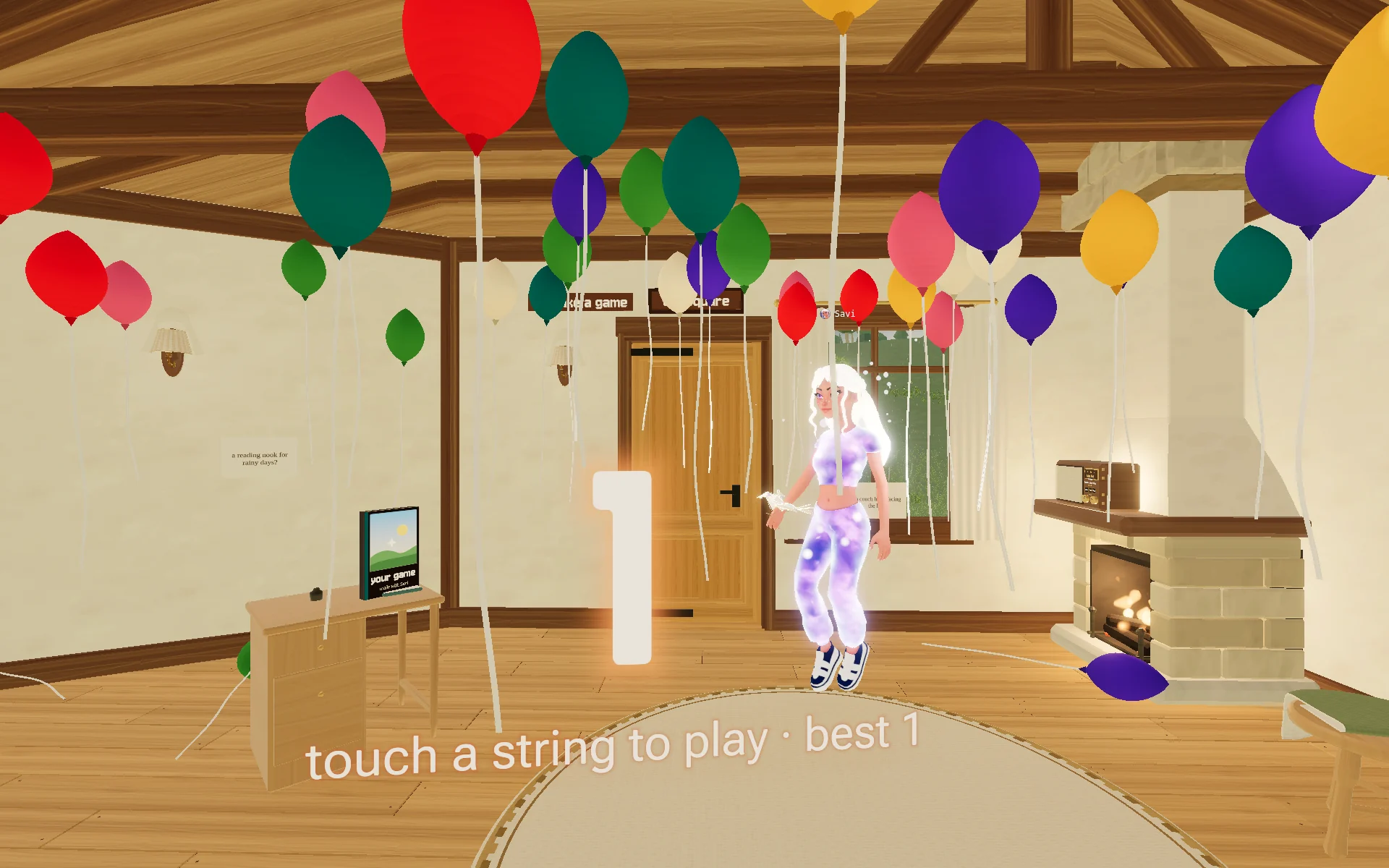
Walk into your own world and say what to build. Savi makes it with you, live.
your game · with Savi

A first-person soldier campaign: breach the townhouse, cross the rooftops and see what waits at Site 9. Every mission asks for timing and nerve.
@robot♥ 4680% loved

Drop in, cast a line and fill your fishing log with friends on a cosy little island.
@dreamcatcher♥ 32100% loved


♥ 1
CrazyGames on your PC now has 20 playable games, including Whack a Mole, Fruit Slash, Neon Pong, Road Hopper, Color Switch and Aim Trainer

♥ 0
A shop: three glowing creature skins and golden starship hulls, opened with the bag button or ;


♥ 3
Four new maps: the Pickle Cellar, Saint Paraskeva's Square, the Frozen River Fair and Freight Depot 7

♥ 1
ORION STRIKE now opens on a cinematic main menu in orbit: start, continue, mission select with your medals and best scores, how to play, settings and credits. Every pause and end screen can return to it. Plus a pilot tip jar.

♥ 1
A brick hideout house next to Harbor Motors Westside, open to every player.

♥ 10
["Maple Street now runs east to Bayside: a beach, the sea, a pier and a lighthouse","Ride the Bayside Wheel in a car that goes all the way round","Grab an ice cream, play 9 holes of mini golf, eat at Salty's fish shack","Sunbathe on a beach towel or walk out on the pier to fish","Tap the attractions on the map to walk straight there"]


@giraffe · loved it · 2026-11-15 · played 2 min · 1 heart: “Cute game with nice attention to details, keep on creating!”
@lego · loved it · 2026-11-14 · played 18 min · 1 heart: “The coziest game I've played on Spawn so far!”
@vladtheimpaler · 2026-09-19 · played 9 min · 1 heart: “Holy Moly! I feel like I'm on an arcade, the game is amazing. props to the opening screen, it's dope!”
@alongzera · 2026-09-18 · played 34 min · 1 heart: “Love the transition to Weekly! The game is more polished compared to the last time i played it!”
@makeriffic · 2026-09-16 · played 45 min · 1 heart: “Got the highest score for Just Another Monday. It was an enjoyable run I was like in an actual arcade playing with only shooting involved. Although stages 3 and 5 can get a little too dark sometimes. Keep the upDAYS coming! lol”
@lego · 2026-09-13 · played 20 min · 1 heart: “Just Another Monday is effin' cool! I had a lot of fun playing it, and somehow I even got the high score! BEAT THAT!”
@sunraku · 2026-09-13 · played 22 min · 1 heart: “Omg this game is so sick! I feel like I am playing at an arcade. What I like about this is the automatic walk of my character. The appearance of the enemies are like those in the arcade. Will definitely will play this again. The movement were so smooth! I love it!”
@kaya · loved it · 2026-10-31 · played 12 min · 1 heart: “sick game! i just had a few rounds myself after the tutorial and im dominating these lobbies so far(they were only bots tho). this reminds me a lot of the games i used to play a few years back, and im digging it! i do wish there was a way to change--”
@spawngamecreator · loved it · 2026-10-26 · played 1 hr 9 min · 1 heart: “great game, my fav game mode is the Halloween event and the gun game one, great work”
@vladtheimpaler · loved it · 2026-10-26 · played 9 min · 1 heart: “Game is fire bro, I don't know what else to say. I love it”
@sailoshi · loved it · 2026-10-26 · played 5 min · 1 heart: “Hey, really nice and easy concept! I like it.”
@vladtheimpaler · loved it · 2026-11-12 · played 4 min: “Hey man, I love how chaotic and awesome this game is. Paladin is a good hero and I love his skills bro!”
@b0gie · loved it · 2026-11-11 · played 4 min: “the audio is really loud but then i found the settings 😅 great gameplay broski keep going!!!”
@sunraku · loved it · 2026-11-05 · played 8 min: “Bro! I really like the characters here especially the VFX of their skills. I tried to use the assassin with 2 dual wielding blade and I really like his skills. W game bro”
@makeriffic · loved it · 2026-11-05 · played 8 min: “Bro these bots are insanely good! Especially Irene and Bardes, it kept on coming back and killing me lol. Overall awesome game graphic. BTW huntress has all the mobility but I think lacks the DPS lol or was it just me using it incorrect way?”
@moypi03 · loved it · 2026-11-18 · played 7 min: “I thought I got my first boss but the captain appears lol hahahah it was fun playing this game man! It was challenging”
@rookie · loved it · 2026-11-16 · played 15 min: “Bro I just lure the 4 boss and now I don't know how to finish them xD I think I can eliminate them all in 3 hours XD”
@makeriffic · loved it · 2026-11-05 · played 20 min: “I think the game is fun and I really enjoyed it. However, the upgrade progression seems to be too slow for me. The marrows for permanent buffs are way too hard to collect. The enemies are too early too increase its number. But I still had fun! GGs”
@giraffe · 2026-11-03 · played 2 min: “The load screen, art work and thought put into this is excellent. Also multi-lang support. Well done would love some of your feedback keep it up!”
@yzykyl · loved it · 2026-11-03 · played 9 min: “This game is pretty SICK! Get it? Srsly tho, it seems like a great survivors-like concept. In my first run, only dealt 6% damage with the actual needle attacks. This encourages great movement and kiting. I think I just went to the boss too early”
@sunraku · 2026-09-23 · played 18 min · 1 heart: “Yo! Love this game. So polished. The paint sound when firing was so good. It is also easy to see the enemy and even my teammates. I think adding like a kill preview will make this game more amazing hehe”
@neitantei · 2026-09-23 · played 15 min · 1 heart: “This game has a Counter-Strike feel to it, but the paintball concept makes it unique! The shooting feels accurate even while moving, which makes the gameplay really fun. Looking forward to seeing different maps in the future. Great game!”
@yujiro · 2026-09-21 · played 1 hr 36 min · 1 heart: “Nice update, bro! The accuracy feels much better now. I’m using the sniper, and I can land shots on opponents more easily without having to worry too much about the bullet trajectory. The weapon feels more precise and satisfying to use.”
@soulsreaper · 2026-09-20 · played 10 min · 1 heart: “This game is super fun and graphics are beautiful, well done !”
@yujiro · 2026-09-19 · played 1 hr 36 min · 1 heart: “It was a really fun game to play, and the movement felt smooth. One thing I noticed was that the bullets sometimes stray away from where the crosshair is aiming, which can make shooting feel a little inaccurate. It would be nice if the bullet trajectory matched the crosshair more closely.”
@jeon · loved it · 2026-10-28 · played 15 min · 1 heart: “Great RPG game! Highbridge looks amazing with its layered streets, market, castle, and all those houses to explore. I also love the smarter magic system and voiced Act titles. Makes me want to explore more and see what quests await!”
@lego · loved it · 2026-11-10 · played 24 min: “Tho this game isn't really my thing (haven't played TES), I'm enjoying the tutorial and guides so far! Thought I'd be lost, but they've been pretty helpful. Anw, I can def see this game going places. Genuinely hope it all works out for you, man!”
@combs · loved it · 2026-11-09 · played 28 min: “This game is incredible. Genuinely felt like I was stepping into an original Elder Scrolls world.”
@flickaboo · loved it · 2026-11-06 · played 43 min: “This game is really promising! The graphics look great, and I had no trouble figuring out what to do. I was also able to skip the prison section and go straight to Valenfeld. I'm definitely grinding this! 😁”
@kaya · loved it · 2026-11-04 · played 17 min: “this reminds me a lot of the classic MMOs I used to play before and im loving it so much. i just finished the tutorial and im going to start embarking on the main quest :) is there an option to see my character in 3rd person? i havent really seen--”